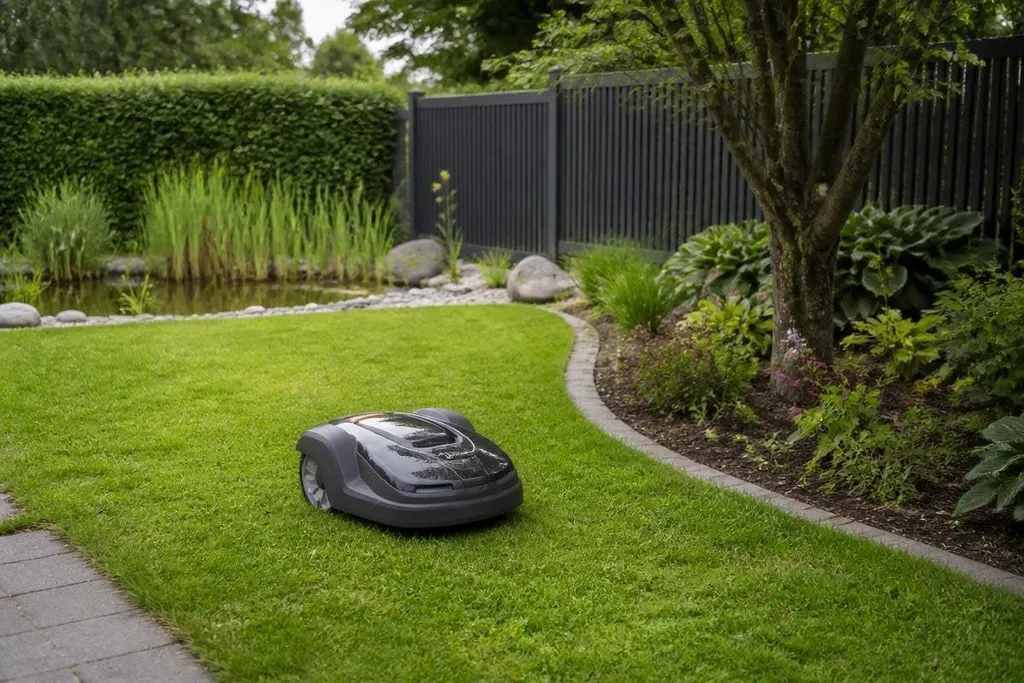
A robot mower can cut grass on an open rectangle. The harder job starts where grass meets a flower bed, fence, pond, tree, or public path. The future of robot lawn care will depend on how well machines read those edges and recover when the yard changes.
Quick read
- Boundary mapping matters as much as blade speed
- Cameras, GPS, and sensors each have limits
- Human checks will remain part of many lawn-care jobs
The lawn is an uneven workplace
A home lawn looks tidy from above, but a mower sees slopes, loose soil, shade, wet grass, and narrow gaps. It also has to handle objects that may appear after the map was made, such as a hose, toy, branch, or fallen tool.
That makes outdoor mowing a navigation problem. The robot needs a map, a way to locate itself on that map, and sensors that can detect objects near its path.
If any one of those parts gives a bad reading, the mower may leave uncut strips or stop in the wrong place. The problem gets harder when the yard changes after setup.
Traditional boundary wires give a robot a fixed guide around the cutting area. Newer designs can use satellite positioning, cameras, or other sensors to mark the lawn without a buried wire. Each method changes the setup work, but none removes the need to check the boundary.
A camera can mistake a dark patch for a hole. Satellite signals can weaken beside buildings or trees. A wire can break underground. The useful question is not which system sounds newest. It is which one keeps the mower inside the cutting area on the yard you actually have.
Cutting grass is only one part of the job
A mower that returns to its dock still needs a sensible charging plan. It must leave enough battery for the trip home, find the dock from different angles, and resume work without creating the same missed strip each time.
Grass also changes after rain, heat, and growth. Wet clippings can gather under the deck, and a taller patch may slow the blade or increase power use. A useful system will need settings that match the lawn rather than one fixed schedule for every day.
Safety adds another layer. The mower needs to detect people and animals, stop when lifted, and stay away from roads or shared paths. Those actions depend on sensor placement, software rules, and the way the owner marks the work area.
For a grounds contractor, these details affect labor more than the blade motor does. A machine that saves cutting time but needs frequent rescues may leave staff checking the mower, moving it, and restarting it.
What the next systems need to show
Public product pages often focus on the clean part of the job: the mower moving across a smooth lawn. Buyers need proof from less tidy sites, with slopes, changing light, narrow passages, and objects placed after setup.
Slopes and narrow gaps are where a mower’s safety claims meet the yard you actually own. Look for a Robot24 report that names the mower, test site, slope, light, and obstacle. Those details give you more to check than a polished clip on smooth grass.
The useful proof will include failed runs as well as successful ones. A video that shows the robot finding its dock after a full work cycle tells you more than a short pass across cut grass.
Price will matter too, but the purchase cost is only one part of the calculation. You may also need boundary work, replacement blades, software service, a new battery, or time for yard checks. Makers that publish those costs give buyers a clearer way to compare machines.
I’d skip any mower whose maker shows polished cuts but gives no clear account of boundary errors, obstacle stops, or service needs.
A practical buying check
Use this list before choosing a mower for a home, sports ground, or grounds crew:
- Map the edges: mark slopes, beds, ponds, gates, and paths before comparing models.
- Check the location method: ask how the mower finds itself beside trees, walls, and buildings.
- Test the dock position: leave room for a straight approach and a safe power connection.
- Ask about wet grass: find out when the maker says mowing should stop and how cleaning works.
- Count human checks: estimate who will clear objects, inspect the cut, and restart the machine.
- Price the upkeep: include blades, batteries, boundary repairs, and service in the purchase plan.
These checks point to the real shift in lawn care. The machine will do the cutting, but the owner still shapes the map, sets the limits, and checks the places where sensors struggle.
What happens next
The next useful step is better evidence from ordinary yards and managed grounds, not faster demonstrations on empty grass. Robot lawn care becomes practical when a mower can handle the edge, explain why it stopped, and return to work without a person standing nearby.